This tutorial uses the NSFW Detect API. See the docs, live demo, and pricing.
Choosing the right NSFW detection API can save your platform from legal liability, app store removal, and advertiser pullbacks. But with multiple image moderation APIs on the market, how do you pick the right one? This guide compares the leading AI image moderation services on accuracy, pricing, categories, and developer experience so you can make an informed decision.
Why You Need an Image Moderation API
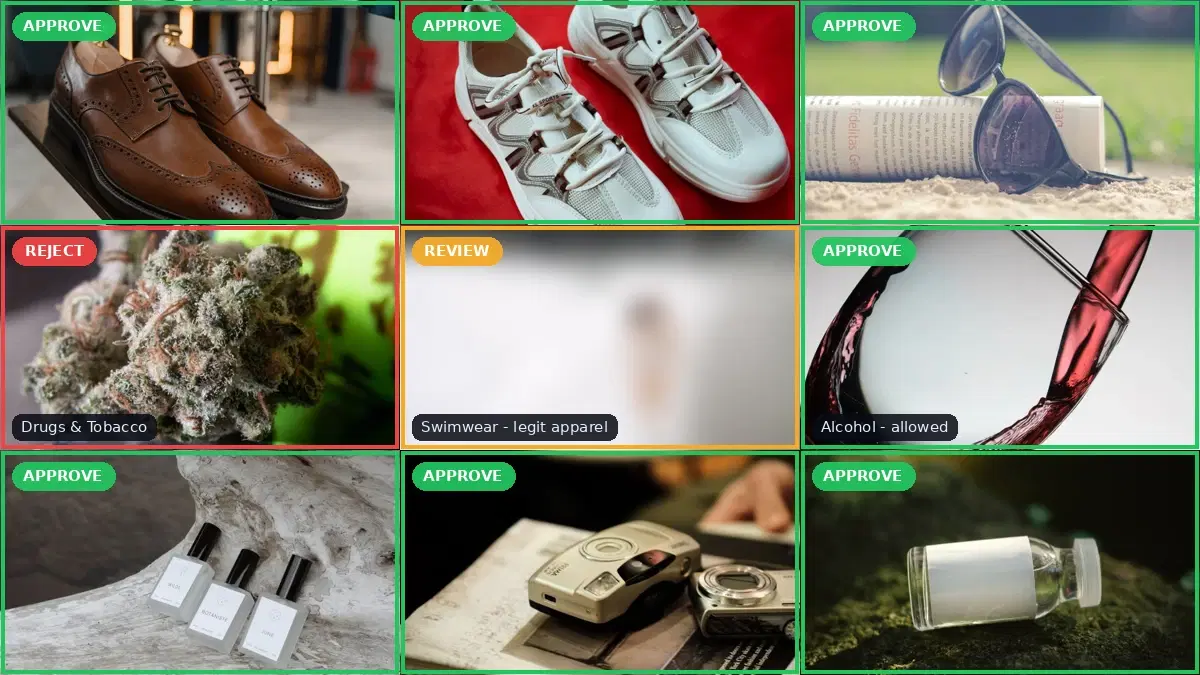
Any platform that accepts user-uploaded images needs automated content moderation. Manual review does not scale: a single moderator can review roughly 1,000 images per day, while a mid-size community can generate that volume in minutes. An image moderation service analyzes each upload in milliseconds and returns structured labels with confidence scores, letting you block, flag, or queue content automatically.
Beyond compliance, automated NSFW detection protects your users. Platforms without moderation see higher churn, lower trust, and lower ad revenue. If you want to see how moderation works in practice, read our guide on automating content moderation with NSFW detection.
Quick Comparison: Top NSFW Detection APIs
| API | Categories | Free Tier | Paid From | Setup |
|---|---|---|---|---|
| AI Engine NSFW Detect | 10 (hierarchical) | 30 req/mo | $12.99/mo (5K req) | RapidAPI key |
| Amazon Rekognition | 7 top-level | 5K images/mo (12 mo) | $0.001/image | AWS account + IAM |
| Google Cloud Vision | 5 (SafeSearch) | 1K units/mo | $1.50/1K images | GCP project + billing |
| Azure AI Content Safety | 4 severity levels | 5K transactions/mo | $1.00/1K images | Azure subscription |
| Clarifai | 5 concepts | 1K ops/mo | $1.20/1K ops | API key |
AI Engine NSFW Detect
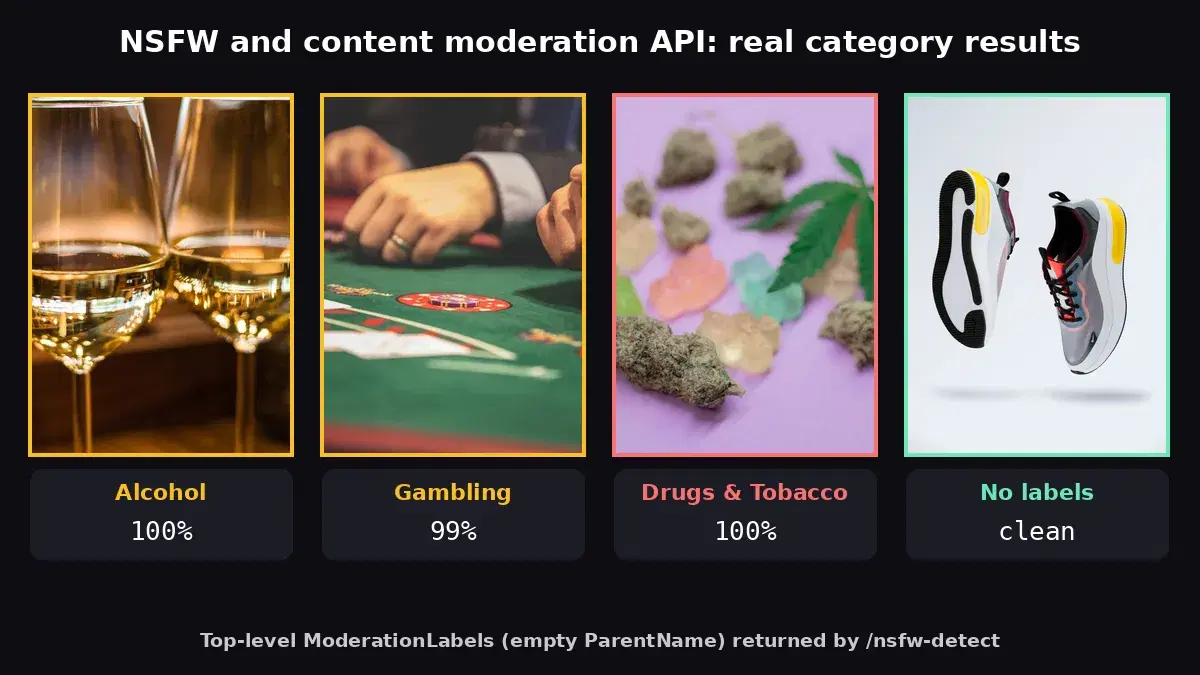
The NSFW Detect API classifies images across 10 moderation categories with hierarchical sub-labels: Explicit Nudity, Suggestive, Violence, Visually Disturbing, Rude Gestures, Drugs, Tobacco, Alcohol, Gambling, and Hate Symbols. Each label returns a confidence score (0–100), so you can set different thresholds per category.
Best for: Developers who want a quick integration without setting up cloud infrastructure. One API key from RapidAPI and you are running in minutes. The hierarchical label system is unique — you can block “Explicit Nudity” while allowing “Suggestive” content with a warning, all from a single API call.
Python Example
import requests

url = "https://nsfw-detect3.p.rapidapi.com/nsfw-detect"
headers = {
    "x-rapidapi-host": "nsfw-detect3.p.rapidapi.com",
    "x-rapidapi-key": "YOUR_API_KEY",
}
payload = {"url": "https://example.com/photo.jpg"}

response = requests.post(
    url,
    headers={**headers, "Content-Type": "application/x-www-form-urlencoded"},
    data=payload,
)
result = response.json()

for label in result["body"]["ModerationLabels"]:
    print(f"{label['Name']}: {label['Confidence']:.1f}%")
The response includes nested labels. For example, a “Suggestive” top-level label may include “Revealing Clothes” as a sub-label with its own confidence score. This lets you build fine-grained moderation rules without multiple API calls.
Amazon Rekognition Content Moderation
Amazon Rekognition DetectModerationLabels covers 7 top-level categories including Explicit Nudity, Violence, and Visually Disturbing. It integrates natively with S3 and Lambda, making it a natural choice if you are already on AWS.
Best for: Teams already invested in the AWS ecosystem who need tight integration with S3, Lambda, and Step Functions. The pay-per-image pricing ($0.001/image) is cost-effective at high volume but requires IAM configuration and AWS billing setup.
Limitation: Fewer granular categories than AI Engine. No sub-labels for nuanced moderation (e.g., distinguishing “Revealing Clothes” from “Partial Nudity”). The free tier expires after 12 months.
Google Cloud Vision SafeSearch
Google Vision SafeSearch returns likelihood ratings (VERY_UNLIKELY to VERY_LIKELY) across 5 categories: adult, spoof, medical, violence, and racy. The simplicity is both a strength and a limitation — you get quick answers but less control over edge cases.
Best for: Projects that need basic safe/unsafe filtering without granular category control. If you already use Google Cloud for other services, adding Vision is straightforward.
Limitation: Only 5 categories and no confidence scores — just likelihood levels. No drug, alcohol, tobacco, or hate symbol detection. Harder to tune thresholds for borderline content.
Azure AI Content Safety
Microsoft’s Azure AI Content Safety replaces the older Content Moderator service. It uses severity levels (0–6) across 4 categories: sexual, violence, self-harm, and hate. The severity scale gives you more control than binary classifications.
Best for: Enterprise teams on Azure who need compliance-grade moderation with severity levels. The 5,000 free transactions per month are generous for development and testing.
Limitation: Fewer categories than AI Engine or Rekognition. No drug, tobacco, alcohol, or gambling detection. Requires an Azure subscription even for the free tier.
Clarifai NSFW Model
Clarifai offers a pre-trained NSFW model that returns probabilities for 5 concepts: nsfw, sfw, gore, drug, and explicit. You can also train custom models on your own data, which is useful if your moderation needs are domain-specific.
Best for: Teams that need custom model training on top of pre-built NSFW detection. If your use case requires detecting content that standard APIs miss (e.g., specific product categories, brand-specific guidelines), Clarifai’s training platform is a differentiator.
Limitation: Fewer out-of-the-box categories than AI Engine. Custom training requires labeled datasets and adds complexity. Pricing can escalate quickly with custom models.
Feature Comparison: What Matters Most
Category Granularity
The number of categories determines how precisely you can moderate content. AI Engine leads with 10 hierarchical categories, followed by Rekognition with 7. If your platform only needs basic adult/violence filtering, Google Vision’s 5 categories may suffice. But if you need to distinguish drugs from alcohol or detect hate symbols separately, you need more granularity.
Confidence Scores vs. Likelihood Levels
AI Engine, Rekognition, and Clarifai return numeric confidence scores (0–100 or 0–1), letting you set precise thresholds. Google Vision returns categorical likelihoods (VERY_UNLIKELY to VERY_LIKELY), which are harder to tune. Azure uses severity levels (0–6), a middle ground between the two approaches.
Integration Complexity
AI Engine requires a single API key from RapidAPI — no cloud account, no IAM roles, no billing setup. AWS, Google, and Azure all require creating a cloud project, configuring credentials, and setting up billing before making a single API call. Clarifai also uses a simple API key but has a steeper learning curve for custom models.
Pricing at Scale
For a platform processing 50,000 images per month:
- AI Engine: $92.99/mo (Mega plan, 50K requests)
- Amazon Rekognition: ~$50/mo ($0.001 × 50K)
- Google Vision: ~$75/mo ($1.50/1K × 50K)
- Azure: ~$50/mo ($1.00/1K × 50K)
- Clarifai: ~$60/mo ($1.20/1K × 50K)
At high volume, pay-per-image services like Rekognition and Azure become cheaper. At low to mid volume (<10K images/month), AI Engine’s flat-rate plans are simpler and more predictable. No surprise bills, no usage spikes to worry about.
When to Choose Each API
Use this decision framework based on your situation:
- Quick start, no cloud setup → AI Engine NSFW Detect. One API key, 10 categories, running in 5 minutes.
- Already on AWS with S3/Lambda → Amazon Rekognition. Native integration with your existing infrastructure.
- Basic safe/unsafe filtering only → Google Vision SafeSearch. Simple likelihood levels, minimal setup if already on GCP.
- Enterprise compliance on Azure → Azure AI Content Safety. Severity levels and enterprise-grade SLAs.
- Custom moderation rules → Clarifai. Train your own models on domain-specific data.
- Nudity only, self-hosted → NudeNet (open source). See the NSFW detection API vs NudeNet test for what it misses outside nudity.
Building a Moderation Pipeline
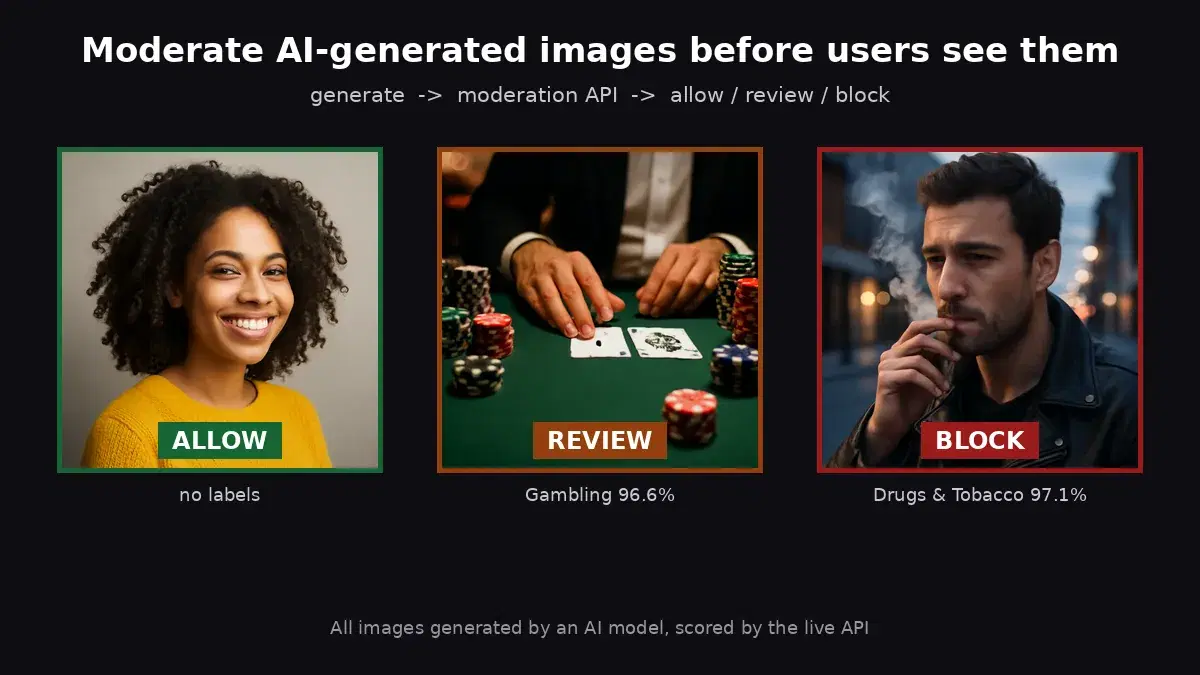
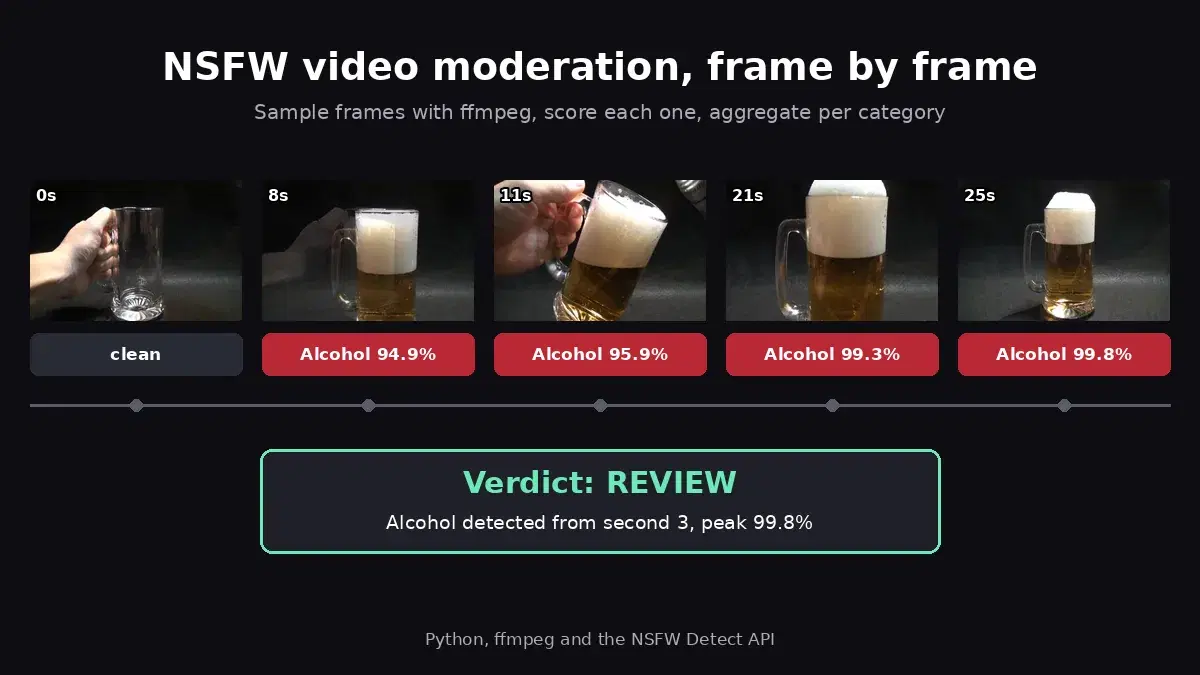
Regardless of which API you choose, a production moderation pipeline follows the same pattern: accept the upload, send it to the NSFW detection API, evaluate the response against your rules, and take action (block, flag, or allow). The same pattern covers video and GIFs: sample frames and score each one, as shown in our NSFW video moderation guide. If your app generates images, run the same check on every output before it is shown: see the NSFW filter for AI-generated images.
Here is a Python example using AI Engine that demonstrates a three-tier moderation system:
import requests

NSFW_API_URL = "https://nsfw-detect3.p.rapidapi.com/nsfw-detect"
HEADERS = {
    "x-rapidapi-host": "nsfw-detect3.p.rapidapi.com",
    "x-rapidapi-key": "YOUR_API_KEY",
    "Content-Type": "application/x-www-form-urlencoded",
}

BLOCK_CATEGORIES = {"Explicit Nudity", "Violence", "Hate Symbols"}
WARN_CATEGORIES = {"Suggestive", "Drugs", "Alcohol", "Tobacco"}


def moderate_image(image_url: str) -> str:
    """Returns 'block', 'warn', or 'allow'."""
    response = requests.post(
        NSFW_API_URL, headers=HEADERS, data={"url": image_url}
    )
    labels = response.json()["body"]["ModerationLabels"]

    for label in labels:
        if label["Name"] in BLOCK_CATEGORIES and label["Confidence"] > 80:
            return "block"

    for label in labels:
        if label["Name"] in WARN_CATEGORIES and label["Confidence"] > 70:
            return "warn"

    return "allow"


# Usage
action = moderate_image("https://example.com/user-upload.jpg")
if action == "block":
    print("Content blocked: violates community guidelines")
elif action == "warn":
    print("Content flagged: queued for human review")
else:
    print("Content approved")
For a complete working example with Discord integration, see our tutorial on building a Discord NSFW moderation bot.
Key Takeaways
The best image moderation API depends on your stack, volume, and moderation granularity needs. For most developers starting out, AI Engine offers the fastest path from zero to working moderation: one API key, 10 categories with sub-labels, and flat-rate pricing with no cloud setup. For teams already deep in AWS, Azure, or GCP, the native cloud solutions integrate more smoothly with existing infrastructure.
Whatever you choose, the key is to automate early. Platforms that add moderation after a safety incident lose users and trust. Start with an NSFW detection API today, set your confidence thresholds, and build from there.
Frequently Asked Questions
- What is the best free NSFW detection API?
- AI Engine NSFW Detect offers 30 free requests per month with 10 moderation categories and sub-labels. Amazon Rekognition and Google Vision also have free tiers but require cloud billing setup. For quick integration without cloud infrastructure, a RapidAPI-based solution is the fastest option.
- How accurate are NSFW detection APIs?
- Modern NSFW detection APIs achieve over 95% accuracy on standard benchmarks. Accuracy varies by category: explicit nudity is detected reliably, while borderline cases like artistic nudity or suggestive content depend on the confidence threshold you set. Most APIs return confidence scores so you can tune precision vs. recall.
- Can I use an image moderation API for real-time content filtering?
- Yes. Most cloud-based image moderation APIs respond in 200-800ms per image, fast enough for real-time upload filtering. For high-volume platforms processing thousands of images per second, consider batching requests or using asynchronous queues to avoid blocking the user experience.